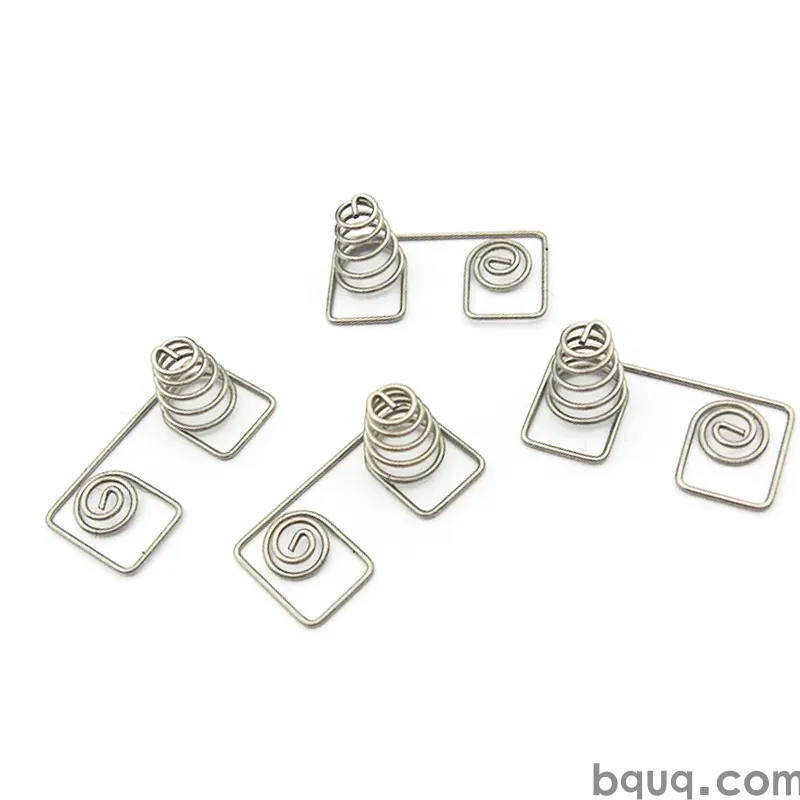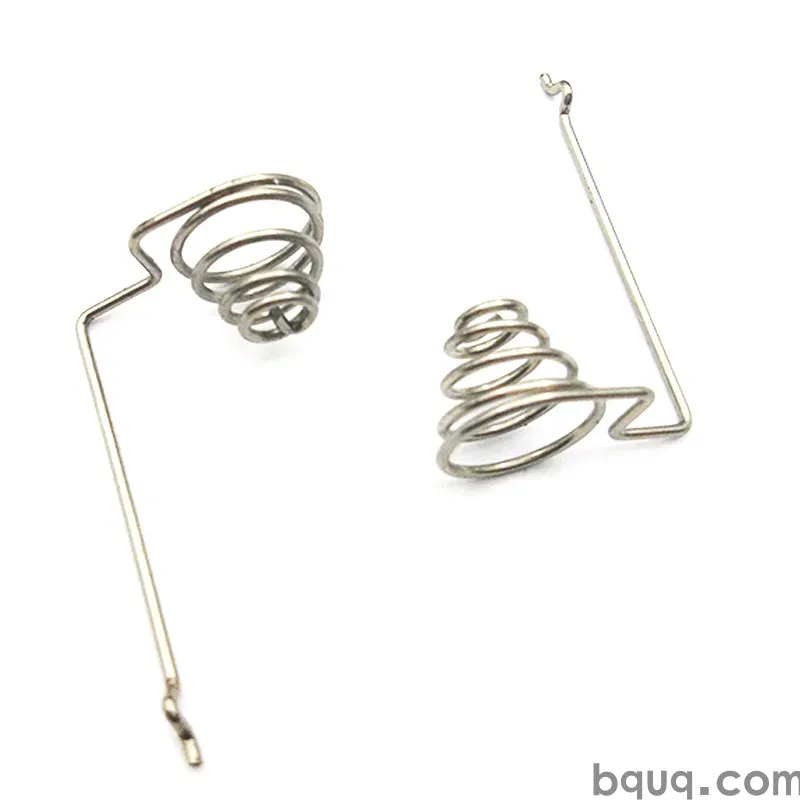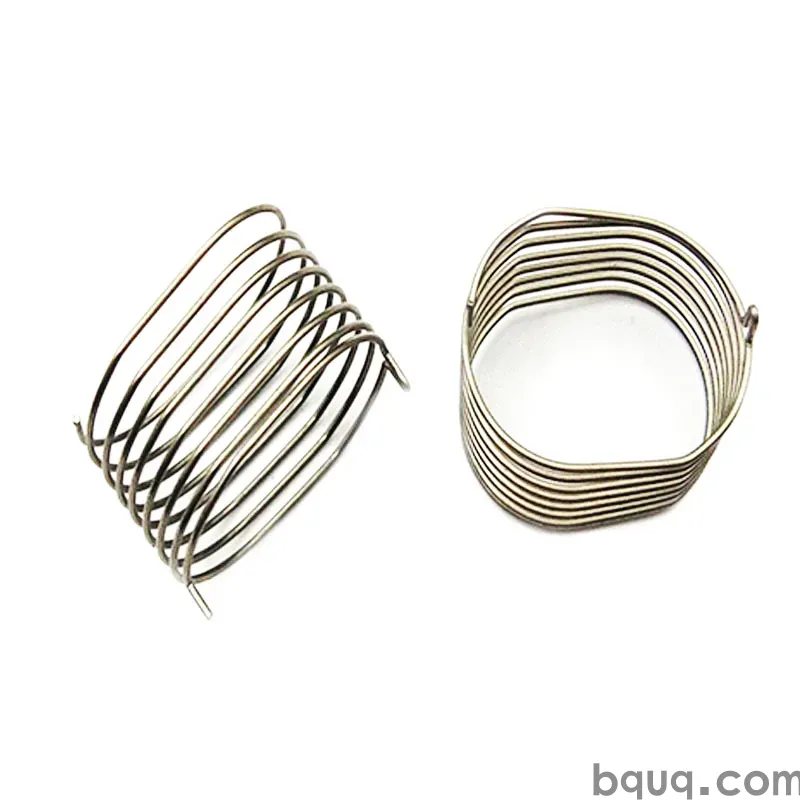
Comment les ressorts sont testés avant approbation : charge à hauteur de travail, raideur, échantillons de fatigue. BQUQ (ISO9001, Dongguan) expédie les données avec les lots.
Essais des ressorts : contrôle de charge, de raideur et de fatigue avant approbation
Avant d'approuver un ressort pour la production, quatre essais comptent : la charge à hauteur de travail (la spécification fonctionnelle, mesurée sur un testeur de charge), la courbe force-déflexion pour la raideur, les contrôles dimensionnels sur le diamètre extérieur et la longueur libre, et un essai de fatigue sur échantillon si le ressort est soumis à des cycles. Un rapport d'inspection de lot avec les valeurs de charge mesurées est le livrable qui distingue une véritable usine de ressorts d'un revendeur — exigez-le, lisez-le et conservez-le.
Les ressorts comptent parmi les petits composants les plus testés en fabrication, mais aussi parmi les moins rigoureusement vérifiés. La raison est que la sortie fonctionnelle — la force — ne peut pas être lue avec un pied à coulisse ; elle nécessite un testeur de charge et une procédure d'essai définie. Deux ressorts de longueur libre identique peuvent différer de 20 % en charge si le diamètre du fil a dérivé. L'essai n'est pas un ajout qualité ; c'est la seule façon de confirmer la fonction du ressort.
L'essai principal : charge à hauteur de travail
L'essai de ressort le plus important est la force à une hauteur de travail spécifiée (ressorts de compression) ou à une extension spécifiée (ressorts d'extension). Le ressort est comprimé ou tiré à la dimension de travail du dessin et la force est lue sur un testeur de charge. C'est le nombre que le mécanisme ressent, c'est donc le nombre à contrôler et à mettre sur le dessin. La procédure d'essai est importante : la vitesse de déflexion doit être lente et constante, la pièce doit se stabiliser avant la lecture, et la hauteur doit être réglée à partir d'une surface de référence réelle, pas à vue.
| Essai | Ce qu'il mesure | Critère d'acceptation typique |
|---|---|---|
| Charge à hauteur de travail | Force à la dimension fonctionnelle | Classe 2 : ±7–10 % de la spécification |
| Charge à une deuxième hauteur | Forme de la courbe de force | Optionnel — pour les pièces progressives |
| Longueur libre | Longueur sans charge | Selon tolérance du dessin |
| Diamètre extérieur/intérieur | Ajustement de l'enveloppe | Selon tolérance du dessin |
| Hauteur à bloc | Longueur complètement comprimée | Maximum, pour contrôle de butée |
| Équerrage / parallélisme | Qualité des extrémités | Selon norme, dépend de la classe |
À retenir : lorsqu'un dessin indique à la fois une longueur libre et une tolérance de charge, testez la charge — l'assemblage ressent la force, pas la longueur. Le testeur de charge d'une usine est son instrument le plus important pour les ressorts, et l'étalonnage du testeur lui-même (typiquement ±1 % de la lecture ou mieux) établit le plancher pour toute revendication de charge. Demandez quel testeur est utilisé et quand il a été étalonné pour la dernière fois ; la réponse est un signal qualité rapide.
Raideur et courbe force-déflexion
La raideur du ressort — force par unité de déflexion — est mesurée en prenant des lectures de charge à plusieurs déflexions et en ajustant la ligne. Sur un ressort linéaire, deux points bien séparés la définissent ; sur les ressorts coniques, à pas variable ou autres ressorts progressifs, la courbe complète doit être enregistrée car la raideur change le long du débattement. La raideur est bien plus sensible au diamètre du fil qu'à tout autre paramètre — la raideur varie avec le diamètre du fil à la puissance quatre — c'est pourquoi une minuscule variation de fil se manifeste par un décalage de raideur suffisant pour rejeter un lot.
| Contrôle | Méthode | Ce qu'il détecte |
|---|---|---|
| Raideur sur ressort linéaire | Charge à 2–3 déflexions | Dérive du diamètre du fil, mauvais nombre de spires |
| Courbe de force complète | Charge à 5+ points | Erreurs de forme progressive |
| Hystérésis | Courbe de charge et décharge | Frottement, assise incorrecte |
| Raideur à température | Essai dans un montage chauffé | Problèmes de module du matériau, service à chaud |
À retenir : demandez la raideur ou la courbe plutôt que seulement la charge en un point lorsque le ressort parcourt une plage — un ressort peut passer à une hauteur et échouer largement à une autre si la raideur a dérivé. Pour les mécanismes critiques, spécifiez une fenêtre de raideur plus la charge à hauteur de travail, et laissez les données de courbe de l'usine prouver les deux. L'hystérésis entre charge et décharge est normale en petites quantités ; une hystérésis importante signale un frottement de spire ou un dommage interne.
Contrôles dimensionnels et qualité des extrémités
Les données de force reposent sur les bases dimensionnelles. Le diamètre extérieur contrôle l'ajustement dans un alésage, la longueur libre contrôle la précharge dans les assemblages à cavité fixe, et la qualité des extrémités — équerrage, parallélisme, extrémités fermées et meulées — contrôle la manière dont la charge est introduite. Un ressort dont l'extrémité n'est pas d'équerre se charge de manière excentrique, ce qui modifie la force effective et invite au flambage. Ces contrôles sont rapides avec un pied à coulisse, une marbre et une équerre, mais seulement si quelqu'un les effectue réellement et enregistre les résultats.
| Dimension | Instrument | Pourquoi c'est important |
|---|---|---|
| DE / DI | Pied à coulisse ou optique | Ajustement alésage, jeu tige |
| Longueur libre | Comparator de hauteur | Précharge en cavité |
| Équerrage des extrémités | Marbre + équerre | Introduction de charge uniforme |
| Parallélisme des extrémités meulées | Marbre | Stabilité en position debout |
| Nombre de spires | Visuel / optique | Raideur et hauteur à bloc |
| Surface du fil | Microscope sur échantillons | Rayures → risque de fatigue |
À retenir : la dispersion dimensionnelle et la dispersion de force sont corrélées à travers le fil et le processus d'enroulement, donc un fournisseur qui enregistre les deux vous donne une image complète. Un bon rapport liste le DE mesuré, la longueur libre et la charge par lot avec la spécification et le résultat conforme/non conforme — pas une seule ligne disant « OK ». La classe de tolérance sur le dessin établit les limites contre lesquelles ces mesures sont jugées.
Essai de fatigue : basé sur échantillons, défini par point final
La fatigue ne peut pas être testée sur chaque pièce — c'est un essai basé sur échantillons qui fait passer des ressorts représentatifs à travers des cycles jusqu'à un point final défini : un nombre de cycles cible sans défaillance, ou des cycles jusqu'à une perte de charge ou une fissure spécifiée. Définissez les conditions d'essai sur le dessin : plage de déflexion (position de travail minimale à maximale), fréquence de cycle et critère de défaillance. Un ressort qui passe 100 000 cycles à 2 mm de débattement peut échouer à 4 mm, donc la plage testée doit correspondre à la plage réelle. Le grenaillage de précontrainte est l'étape de production qui améliore le plus les résultats de fatigue, et l'essai de fatigue est ce qui prouve si le grenaillage et la conception ensemble atteignent la cible de durée de vie.
| Paramètre d'essai de fatigue | Valeur typique | Note |
|---|---|---|
| Taille d'échantillon par lot | 3–5 pièces | Représentatif, pas statistique |
| Point final | Cible de cycles ou % de perte de charge | Définir avant l'essai |
| Fréquence | 5–20 Hz typique | Éviter l'auto-échauffement sur petites pièces |
| Critère d'acceptation | Aucune défaillance jusqu'aux cycles cibles | Fissures ou rupture = échec |
| Rapport | Cycles effectués + état | Conserver avec l'enregistrement du lot |
À retenir : une revendication de fatigue sans les conditions d'essai est du marketing. Obtenez la plage de déflexion, la cible de cycles et le critère de défaillance par écrit, et conservez le rapport d'essai sur échantillon avec les enregistrements du lot — c'est votre preuve si une défaillance sur le terrain est jamais contestée.
BQUQ teste les ressorts comme ils sont utilisés : charge à hauteur de travail sur des testeurs étalonnés, courbes de raideur pour chaque géométrie, contrôles dimensionnels et d'extrémités par lot, et essais de fatigue sur échantillons jusqu'à votre cible de cycles — le tout enregistré dans un rapport d'inspection de lot qui accompagne les marchandises. Les ressorts de compression, d'extension et de torsion passent tous la même porte sous ISO9001 à Dongguan. Envoyez le dessin avec les exigences d'essai à sc@bquq.com ou WhatsApp +86 13713157787 pour un devis sous 12 heures ouvrables, et demandez à voir un rapport de lot d'échantillon avant de vous engager.
Q : Quel est l'essai de ressort le plus important avant approbation ?
La charge à hauteur de travail — elle vérifie la fonction réelle du ressort dans votre mécanisme. Tout le reste (longueur, diamètre, extrémités) soutient cette force. Testez-la avec un testeur de charge étalonné et exigez les valeurs mesurées dans le rapport de lot.
Q : Combien de ressorts doivent être testés en fatigue ?
Typiquement 3 à 5 échantillons par lot, cyclés jusqu'au point final défini. L'essai de fatigue est basé sur échantillons car il détruit les pièces ; le rapport d'échantillon plus un contrôle de production cohérent (grenaillage, matériau, fil) est ce qui protège tout le lot.
Q : Quelle est une tolérance de charge raisonnable à spécifier ?
La production de classe 2 maintient environ ±7–10 % de la charge spécifiée à hauteur de travail ; la classe 1 atteint environ ±5 % avec mesure individuelle. Spécifier en dessous de ±5 % signifie sélectionner les ressorts dans des bacs — planifiez le coût et la logistique de cela si votre mécanisme l'exige.
Q : Puis-je tester les ressorts moi-même au lieu de faire confiance au rapport de l'usine ?
Oui — un testeur de charge et des jauges de base vous permettent de vérifier les lots entrants en quelques minutes, et la vérification ponctuelle par rapport au rapport de l'usine est une bonne pratique. Le rapport vous donne les valeurs à comparer ; votre propre testeur confirme les données et l'étalonnage du fournisseur.
Q : Que contient un rapport d'inspection de lot approprié ?
Des valeurs mesurées, pas seulement « OK » : DE, longueur libre et charge à hauteur de travail par échantillon ou par lot, comparés aux limites du dessin, plus la date d'essai et l'instrument. Demandez-le à chaque expédition et classez-le avec les enregistrements du lot.
Rédigé par l'équipe d'ingénierie BQUQ. BQUQ est une usine source certifiée ISO9001 à Dongguan, en Chine, exploitant des lignes d'usinage CNC, d'emboutissage des métaux, de ressorts sur mesure, de dissipateurs thermiques et de pinces sous un même toit. Envoyez les dessins à sc@bquq.com ou WhatsApp +86 13713157787 pour un devis sous 12 heures ouvrables. www.bquq.com