Coupe, taraudage ou fraisage de filets : chaque procédé offre une tolérance différente. Associez le procédé à la classe 6H, 2B ou plus stricte. BQUQ usine les filetages, devis sous 12 heures.
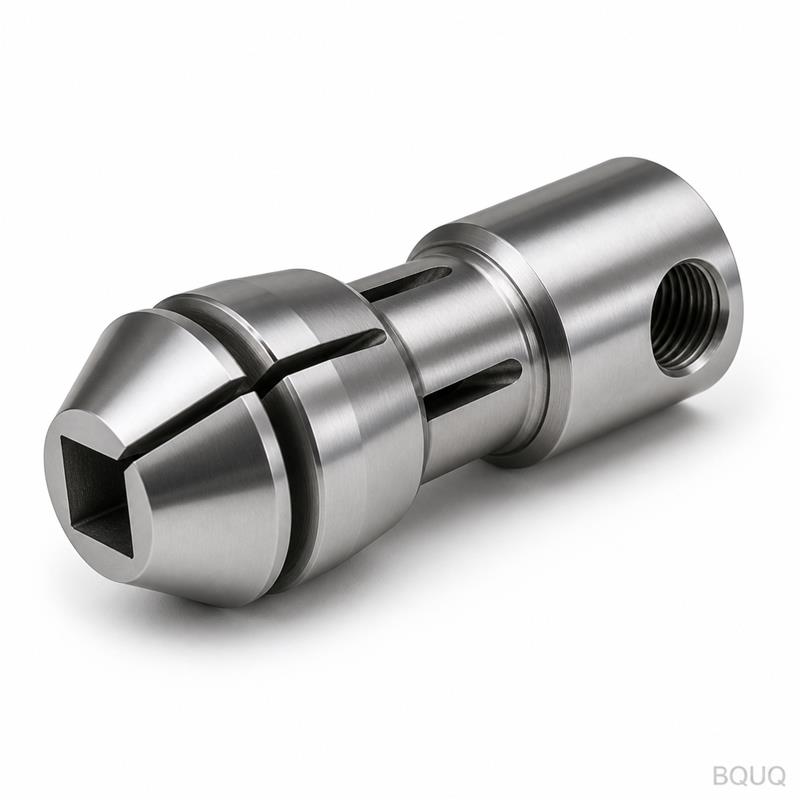
Filetage CNC : coupe, taraudage ou fraisage — et la tolérance de chaque procédé
La coupe à un point donne la tolérance de filetage la plus serrée et la plus contrôlable ; le taraudage est le moins cher pour les petits trous dans les matériaux tendres ; le fraisage de filets est le plus sûr pour les grands diamètres, les matériaux durs et les trous borgnes. La classe de tolérance dont vous avez réellement besoin — 6H, 2B ou plus stricte — devrait déterminer le procédé, et non l'inverse.
Les filetages sont la caractéristique la plus inspectée sur de nombreuses pièces CNC, mais c'est aussi celle qui est le plus souvent spécifiée sans comprendre comment le procédé de fabrication limite ce qu'un atelier peut livrer. Un trou taraudé et un trou fraisé avec filet aboutissent tous deux à la même taille nominale, mais ils présentent des risques différents d'évasement, de conicité, d'erreur de pas et de dérive du diamètre sur flancs. Ce guide explique les trois principaux procédés de filetage CNC, la tolérance que chacun peut réalistement tenir, et comment spécifier les filetages pour obtenir des ajustements qui fonctionnent sans payer pour des classes que vous ne vérifiez jamais.
Ce que signifient réellement les classes de tolérance de filetage
Avant de comparer les procédés, clarifions le langage des tolérances. Les filetages métriques utilisent les classes ISO où le nombre est le degré et la lettre la position — 6H est la tolérance standard pour filetage intérieur (écrou), 6g la tolérance standard pour filetage extérieur (boulon). Les filetages unifiés utilisent 1A/2A/3A pour l'extérieur et 1B/2B/3B pour l'intérieur, où 2A/2B est l'ajustement commercial standard et 3A/3B la précision. La classe contrôle principalement le diamètre sur flancs, plus les tolérances de diamètre mineur et majeur.
| Paire de classes | Ajustement typique | Où elle est utilisée |
|---|---|---|
| 6H / 6g (métrique), 2B / 2A (unifié) | Ajustement libre standard | Pièces mécaniques générales, plupart des productions |
| 6H / 4g6g | Extérieur plus serré | Vis de précision, calibres |
| 5H / 4h, 3B / 3A | Précision | Filetages d'instruments, raccords aérospatiaux |
| 7H / 8g | Ajustement libre | Filetages revêtus, service à haute température |
La tolérance du diamètre sur flancs pour un filetage intérieur standard M6×1 en classe 6H est d'environ 0,125 mm au total — pas un chiffre serré en termes absolus, mais qui interagit mal avec l'usure de l'outil, la dérive du taraud et la déflexion si le procédé n'est pas contrôlé. Lorsque vous voyez un dessin appelant 3B ou 5H sur un trou borgne profond, reconnaissez que vous demandez un niveau que le procédé pourrait ne pas être en mesure de tenir sans outillage et inspection spéciaux.
Coupe à un point : la référence en matière de tolérance
Le filetage à un point sur un tour CNC coupe chaque rainure de filet avec un outil profilé, se déplaçant le long de l'axe en coordination avec la rotation de la broche. Parce que la trajectoire de l'outil est générée par les axes de la machine plutôt que par un outil préformé, l'opérateur contrôle directement le pas, la profondeur et le profil, et peut compenser l'usure. Cela fait de la coupe à un point le procédé de référence pour la précision, et la norme pour les grands diamètres et les pas inhabituels qu'aucun taraud ou fraise à fileter ne couvre.
| Procédé | Contrôle typique du diamètre sur flancs | Gamme de tailles | Idéal pour |
|---|---|---|---|
| Coupe à un point (tour) | Le plus serré, corrigible à la volée | Toute, surtout grande | Pas inhabituels, classes serrées, filetages extérieurs |
| Taraudage (taraud coupant) | Bon, classe 6H/2B typique | Jusqu'à ~M24 à la main ; plus grand en machine | Petits trous intérieurs, grand volume, matériaux tendres/moyens |
| Fraisage de filets | Bon, classe 6H/2B typique, contrôlable | M2 jusqu'à très grand | Matériaux durs, trous borgnes, grands diamètres, un outil pour de nombreuses tailles |
| Roulage de filets (extérieur) | Excellente surface, 3A possible | Petit–moyen | Filetages extérieurs en grand volume sur pièces de tour automatique |
L'inconvénient de la coupe à un point est le coût par filet et le temps de cycle. C'est une opération plus lente que le taraudage, et sur les filets multi-pas ou profonds, elle nécessite plusieurs passes avec une synchronisation précise de la machine. Lorsque le dessin exige le meilleur filet possible, c'est ce procédé qu'il faut — nos cellules de tournage CNC exécutent le filetage à un point comme opération standard et vérifient le résultat avec des calibres à fileter sur la première pièce.
Taraudage : économique, rapide et limité par le taraud
Le taraudage forme un filetage intérieur en entraînant un taraud cannelé dans un trou existant. C'est la méthode la moins coûteuse pour les petits trous — d'environ M1,6 jusqu'à environ M20 — et elle est rapide, c'est pourquoi les séries de production de trous filetés dans les boîtiers, supports et couvercles sont presque toujours taraudées. Les tarauds coupants enlèvent de la matière ; les tarauds à froid la déplacent, ce qui peut améliorer la structure du grain du filet mais nécessite un trou de pré-perçage de taille différente et plus de couple.
Les limites du taraudage sont la tolérance et la dérive due à l'usure de l'outil. Un taraud usé ou désaligné produit des entrées évasées et des diamètres sur flancs surdimensionnés, c'est pourquoi les filetages taraudés sont généralement garantis en classe 6H/2B plutôt qu'en classes de précision. Le taraudage rigide sur une machine CNC — où la broche avance en synchronisation exacte avec l'axe Z — élimine la plupart des risques de désalignement, et un taraud de qualité maintenu dans un porte-outil de précision garde l'entrée propre. Si votre dessin appelle un filetage intérieur 3B sur une pièce de production, attendez-vous à ce que l'atelier demande si le taraudage est acceptable ou si le fraisage de filets est requis pour le tenir.
| Décision de filetage | Choisir le taraudage | Choisir le fraisage de filets |
|---|---|---|
| Taille du trou | Moins de ~M20 | Toute taille, excelle en grand |
| Matériau | Aluminium, acier, plastiques | Alliages durs, titane, inox |
| Type de trou | Trous débouchants idéaux | Trous borgnes avec filet complet jusqu'au fond |
| Volume | Élevé, cycle court | Faible–moyen, un outil pour de nombreuses tailles |
| Classe de tolérance requise | 6H/2B standard | 6H/2B et plus serré, ajustable |
Fraisage de filets : l'option de précision flexible
Le fraisage de filets coupe le filet avec un outil rotatif qui interpole une trajectoire hélicoïdale dans le trou. Ce n'est pas un taraud — l'outil entre au diamètre du trou, se déplace en cercle tout en avançant d'un pas par révolution, puis sort. Parce que la forme du filet est générée par le mouvement de la machine, une fraise à fileter coupe n'importe quel diamètre du même pas, et le diamètre sur flancs effectif peut être ajusté en modifiant le rayon de la trajectoire programmée. Cela fait du fraisage de filets la réponse standard pour les grands trous, les matériaux durs comme le titane et l'acier traité thermiquement, et les trous borgnes où un taraud laisserait un filet incomplet ou risquerait de se casser.
Le fraisage de filets est également tolérant aux pannes d'outil : une fraise à fileter cassée ne reste pas coincée dans la pièce comme le ferait un taraud cassé. Les inconvénients sont le temps de cycle — c'est plus lent que le taraudage par trou — et la nécessité d'une machine avec interpolation hélicoïdale. Sur les travaux de fraisage CNC, le fraisage de filets est la norme pour tout ce qui dépasse environ M12 en production, et pour tout filet de précision dans un trou borgne où l'évacuation des copeaux et la profondeur de forme complète comptent.
Spécifier les filetages pour que le devis soit honnête
Le moyen le plus rapide de surpayer pour des filetages est d'appeler une classe de précision sans raison fonctionnelle, ou de laisser la classe complètement de côté et de laisser l'atelier supposer la plus serrée. Écrivez l'appel complet sur le dessin : taille, pas, classe, et si c'est intérieur ou extérieur — par exemple M10×1,5-6H intérieur, ou 1/4-20 UNC-2B. Si le filet doit accepter un calibre spécifique, nommez la classe du calibre. Si c'est un filet structurel qui n'a besoin que d'un ajustement libre, dites-le ; l'atelier choisira alors le procédé qui coûte le moins tout en respectant l'appel.
Signalez également le revêtement et le placage sur le dessin, car ils changent la taille finale. Un filet qui doit être zingué ou nickelé nécessite une surépaisseur avant placage — souvent coupé à une classe légèrement plus lâche pour que la pièce plaquée s'adapte toujours à son calibre. Les ateliers qui connaissent la finition à l'avance intègrent la surépaisseur dans la passe de filetage ; les ateliers qui l'apprennent après l'usinage mettent le lot au rebut.
Tolérances sur lesquelles vous pouvez compter
Pour la réalité de production : les filetages taraudés dans l'aluminium et l'acier tiennent 6H/2B de manière fiable lorsque l'outil est neuf et la broche rigide ; le fraisage de filets tient les mêmes classes avec une meilleure constance sur les matériaux durs et ajoute la capacité de régler le diamètre sur flancs sur la première pièce ; la coupe à un point tient les classes les plus serrées et n'importe quel pas. Les filetages de précision — 3B, 5H et les formes critiques pour calibres — vont au fraisage de filets ou à la coupe à un point avec inspection sur un calibre à fileter dédié ou une MMT, comme couvert dans notre guide tolérance de trou par procédé et la référence de tolérances CNC plus large.
Envoyez un dessin avec des appels de filetage clairs et la classe de calibre requise, et un atelier compétent fera correspondre le procédé à la classe — coupe, taraudage ou fraisage — plutôt que l'inverse. C'est exactement ainsi que nous traitons le filetage sur les pièces de tournage CNC, les pièces fraisées et la géométrie mixte qui passe par notre ligne de composants de précision : procédé choisi pour la tolérance, vérifié sur la première pièce, et devisé honnêtement sur le risque.
Questions fréquemment posées
Q : Quel procédé de filetage CNC tient la tolérance la plus serrée ?
R : La coupe à un point tient le diamètre sur flancs le plus serré et le plus contrôlable car la trajectoire de l'outil est générée et corrigée par les axes de la machine. Le fraisage de filets est la meilleure option pour les filetages intérieurs dans les trous durs ou de grande taille ; le taraudage est généralement limité aux classes standard 6H/2B.
Q : Quand dois-je fraiser un filet au lieu de tarauder ?
R : Fraisez le filet lorsque le trou est grand (environ au-dessus de M12), que le matériau est dur comme le titane ou l'acier traité thermiquement, que le trou est borgne et nécessite un filet complet jusqu'au fond, ou que vous devez ajuster le diamètre sur flancs sans changer d'outil. Taraudez lorsque les trous sont petits, le volume élevé et que 6H/2B est suffisant.
Q : Que signifie 6H sur un dessin de filetage métrique ?
R : 6H est la classe de tolérance ISO pour un filetage intérieur — degré 6 avec une position H (surépaisseur nulle) — et est l'ajustement intérieur commercial standard. Elle s'associe aux filetages extérieurs 6g pour un ajustement libre normal. Les classes plus serrées comme 5H ou 4H sont des ajustements de précision qui coûtent plus cher à produire et à inspecter.
Q : Pourquoi les trous borgnes taraudés ont-ils des filets incomplets au fond ?
R : Un taraud a besoin d'un dégagement sous le filet pour sortir son chanfrein, laissant les derniers filets incomplets à moins que le trou ne soit assez profond. Le fraisage de filets évite cela car l'outil entre et sort du trou le long de sa propre trajectoire, produisant des filets de forme complète près du fond.
Q : Comment le placage affecte-t-il la tolérance du filet ?
R : Le placage ajoute de l'épaisseur à la surface, rétrécissant les filets intérieurs et augmentant les extérieurs. Les filets avant placage sont généralement coupés à une classe plus lâche pour que la pièce revêtue s'adapte toujours à son calibre. Indiquez toujours le placage sur le dessin afin que la passe de filetage inclue la surépaisseur.
Rédigé par l'équipe d'ingénierie BQUQ. BQUQ est une usine source certifiée ISO9001 à Dongguan, en Chine, exploitant des lignes d'usinage CNC, d'emboutissage des métaux, de ressorts sur mesure, de dissipateurs thermiques et de pinces sous un même toit. Envoyez les dessins à sc@bquq.com ou WhatsApp +86 13713157787 pour un devis sous 12 heures ouvrables. www.bquq.com