Ressorts coniques et à pas variable : imbrication, stabilité et raideur progressive — quand ils surpassent les ressorts cylindriques. BQUQ (ISO9001, Dongguan) les fabrique.
Ressorts coniques et à pas variable : quand ils surpassent les ressorts cylindriques
Les ressorts coniques et à pas variable surpassent les ressorts cylindriques dans trois situations spécifiques : lorsque la hauteur comprimée doit être minimale (les ressorts coniques s'imbriquent spire dans spire), lorsque le ressort ne doit pas flamber en espace libre (les ressorts coniques sont latéralement stables), et lorsque le mécanisme exige une raideur qui augmente à mesure que le ressort se comprime (conception à pas variable ou conique). Partout ailleurs, un ressort cylindrique est moins cher et plus prévisible — la question de conception est donc de savoir quel problème vous avez réellement.
Le ressort de compression cylindrique est la solution par défaut pour une bonne raison : raideur linéaire, calcul simple, enroulage économique. Mais il présente des faiblesses fixes — la hauteur bloc occupe de l'espace, les ressorts longs et élancés flambent, et la raideur ne change jamais. Les formes coniques, en tonneau et en sablier existent pour attaquer ces faiblesses, chacune au prix d'une complexité accrue. Bien choisir consiste à faire correspondre la géométrie à la contrainte qui affecte réellement votre assemblage.
Pourquoi les ressorts coniques existent : hauteur bloc imbriquée
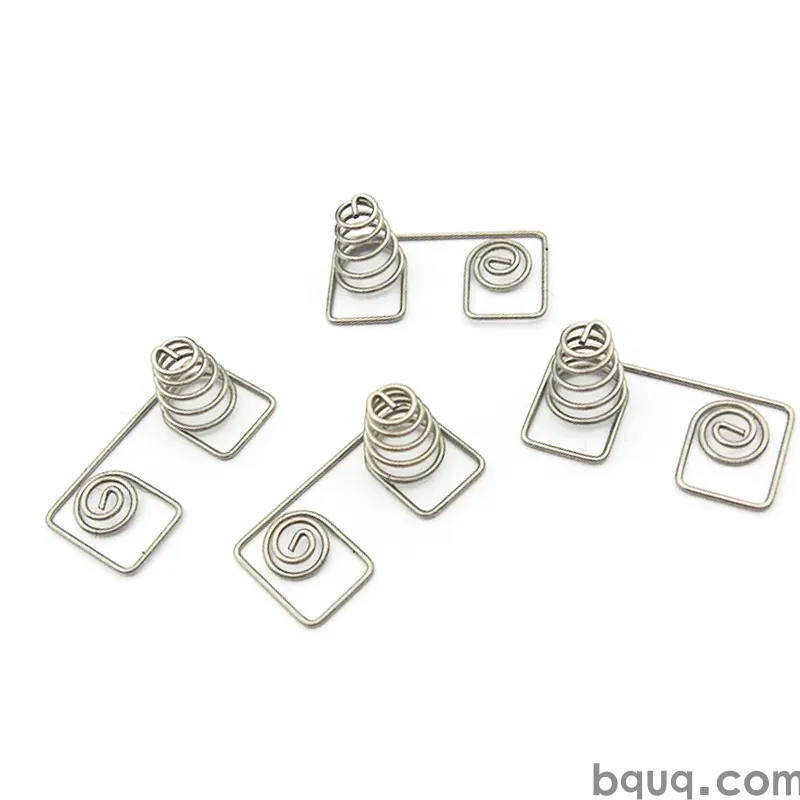
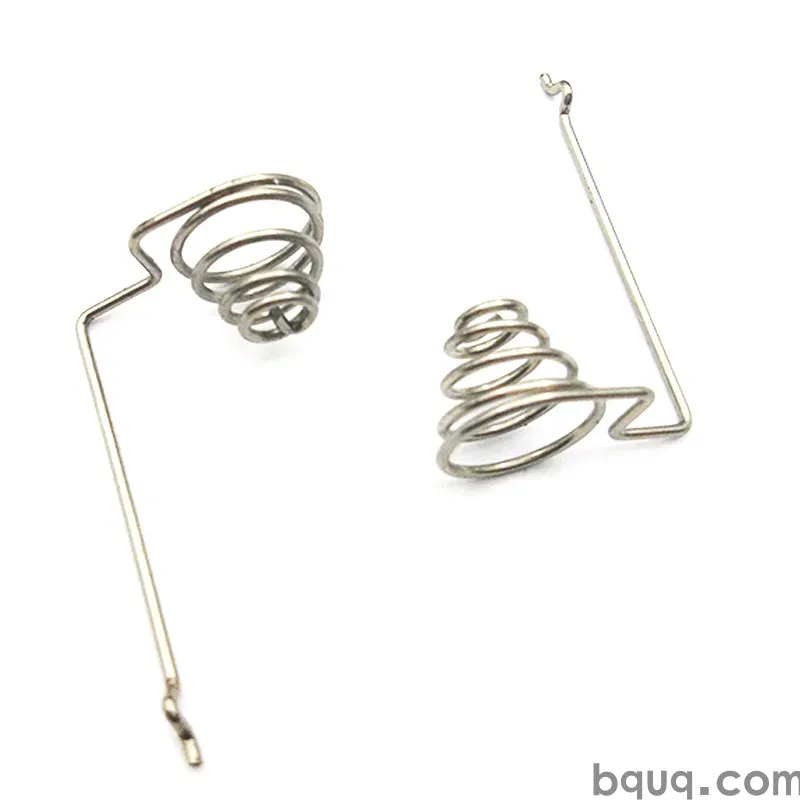
Un ressort conique est enroulé avec un diamètre de spire décroissant, de sorte qu'à pleine compression, les spires s'imbriquent les unes dans les autres. La hauteur bloc peut chuter à environ un diamètre de fil par spire plus la base — considérablement plus basse qu'un ressort cylindrique de course égale, dont la hauteur bloc empile chaque spire sur les autres. Dans les produits où la hauteur comprimée est la dimension contraignante — compartiments de piles, actionneurs compacts, mécanismes de caméra — la forme conique est souvent le seul moyen d'obtenir la course.
| Forme de ressort | Comportement de la hauteur bloc | Comportement de la raideur | Résistance au flambage |
|---|---|---|---|
| Ressort cylindrique | Spires empilées : hauteur bloc = d × n | Linéaire | Flambage lorsque élancé |
| Conique | Spires imbriquées : hauteur bloc la plus basse | Progressive (croissante) | Excellente — stable |
| Tonneau (milieu élargi) | Empilement modéré | Linéaire | Bonne |
| Sablier (milieu rétréci) | Empilement modéré | Linéaire | Bonne — stable latéralement |
| Pas variable | Identique au cylindrique (même diamètre extérieur) | Progressive | Identique au cylindrique |
À retenir : si votre contrainte est la hauteur comprimée, le conique gagne haut la main — le rapport course/hauteur bloc est le meilleur de toutes les formes de ressort. Si votre contrainte est la stabilité latérale en espace libre (un ressort autonome qui ne doit pas se déformer latéralement), les formes coniques, en tonneau et en sablier résistent toutes mieux au flambage qu'un ressort cylindrique de même longueur, car la ligne médiane incurvée répartit la charge latérale. Ces deux avantages couvrent la plupart des applications coniques.
La raideur progressive : ce que la rigidité croissante vous apporte
Un ressort conique n'est pas seulement plus court une fois comprimé — il est plus rigide, car à mesure que les grandes spires arrivent en butée une par une, moins de spires actives restent et la raideur augmente. Les ressorts à pas variable (même diamètre, mais le pas change le long de la longueur) produisent le même effet progressif : l'extrémité à pas serré arrive en butée en premier, puis la raideur grimpe. Une raideur croissante donne un mécanisme qui semble souple aux faibles charges et ferme aux fortes charges — utile pour une suspension qui doit isoler les petites vibrations tout en résistant aux gros impacts sans atteindre la butée.
| Besoin applicatif | Forme qui le satisfait | Pourquoi |
|---|---|---|
| Départ souple, fin ferme (suspension, vanne) | Pas variable ou conique | La raideur augmente à mesure que les spires arrivent en butée progressivement |
| Fréquence naturelle constante | Ressort cylindrique | Raideur linéaire, réglage simple |
| Absorption des chocs sans blocage des spires | Ressort progressif | La raideur croissante résiste à la butée |
| Hauteur bloc faible | Conique (imbriqué) | Les spires se télescopent |
| Stabilité latérale en espace libre | Conique, tonneau, sablier | Les charges latérales sont résistées par la géométrie |
À retenir : la raideur progressive est un atout uniquement lorsque vous voulez réellement un comportement non linéaire. Un mécanisme qui a simplement besoin d'un ressort pour pousser avec une force X à une hauteur Y est mieux servi par un ressort cylindrique, car sa raideur linéaire rend la force prévisible et le calcul simple. Les concepteurs choisissent des formes progressives pour les suspensions, la protection contre les surcharges et les mécanismes à toucher doux — jamais parce qu'une raideur non linéaire semble sophistiquée.
Limites de conception et coûts réels des ressorts non cylindriques
Les formes coniques et à pas variable coûtent plus cher à fabriquer et à concevoir, et elles comportent des limites spécifiques. La raideur d'un ressort conique n'est pas constante, ce qui signifie que la courbe force-déflexion doit être mesurée, et non calculée à partir d'une seule formule — la plupart des conceptions nécessitent un prototype et une courbe de force réelle avant la production. L'extrémité large d'un ressort conique nécessite généralement un siège ou un guide, car le diamètre de spire change et le ressort ne peut pas reposer d'aplomb par lui-même. Les ressorts à pas variable exigent un contrôle minutieux de la transition de pas, sinon la courbe de raideur développe un coude au lieu d'une montée régulière.
| Facteur | Ressort cylindrique | Conique / pas variable |
|---|---|---|
| Calcul de la raideur | Formule unique | Courbe mesurée, prototype nécessaire |
| Prévisibilité de la force | Élevée | Progressive par conception |
| Hauteur bloc | d × n | Beaucoup plus basse (conique) |
| Coût d'enroulage | Référence | +20–50 % en général |
| Assise des extrémités | Extrémités meulées à plat | Peut nécessiter un siège ou un guide à la grande extrémité |
| Mesure | Test de charge standard | Courbe de force à plusieurs hauteurs |
À retenir : prévoyez un budget pour un prototype et une courbe force-déflexion mesurée chaque fois que la raideur est progressive — le dessin seul ne peut pas vous donner la courbe réelle avec les tolérances de production. La prime par rapport à un ressort cylindrique est généralement de 20 à 50 % par pièce et un cycle de développement plus long ; les ressorts coniques et à pas variable sont choisis lorsque la géométrie ou le comportement du mécanisme l'exigent, et non comme une amélioration. Pour les pièces à grand volume, le processus de formage de fil et d'enroulage peut maintenir la forme de manière répétable, mais la première pièce compte : vérifiez la courbe sur des pièces réelles avant d'approuver.
Choix : trois questions qui déterminent la forme
Posez trois questions avant de vous tourner vers une conception conique ou à pas variable. Premièrement : la hauteur comprimée est-elle la contrainte déterminante ? Si le ressort doit s'adapter dans un espace court tout en offrant une longue course, le conique est la réponse. Deuxièmement : le ressort se tiendra-t-il en espace libre où il pourrait flamber ? Si oui et qu'un guide est impossible, une forme conique, en tonneau ou en sablier apporte la stabilité. Troisièmement : le mécanisme exige-t-il une raideur croissante ? Si le chemin de charge est souple-puis-ferme, la conception progressive est appropriée — et la courbe de force mesurée devient votre test d'acceptation. Si les trois réponses sont non, spécifiez un ressort de compression cylindrique et dépensez l'argent économisé en tolérance ou en finition. Les formes sont complémentaires, non concurrentes — de nombreux assemblages utilisent un ressort cylindrique là où l'espace le permet et un ressort conique uniquement là où ce n'est pas le cas.
BQUQ fabrique des ressorts coniques, en tonneau, en sablier et à pas variable sous certification ISO9001 à Dongguan, et traite chaque pièce à raideur progressive comme un travail à courbe mesurée : prototype d'abord, courbe de force à plusieurs hauteurs, puis production avec la courbe comme critère d'acceptation. Les ressorts de compression de toutes formes sont produits sur la ligne de compression, avec les formes de torsion sur la ligne de torsion. Envoyez le dessin avec l'enveloppe spatiale et le comportement force-course requis à sc@bquq.com ou WhatsApp +86 13713157787, et le devis revient sous 12 heures ouvrées — avec une réponse franche sur la question de savoir si la forme justifie son coût.
Q : Quand dois-je utiliser un ressort conique plutôt qu'un ressort cylindrique ?
Lorsque la hauteur comprimée est critique (les spires imbriquées donnent la hauteur bloc la plus basse), lorsque le ressort se tient libre et flamberait, ou lorsque vous voulez une raideur croissante. Sinon, un ressort cylindrique est moins cher, plus simple et plus prévisible.
Q : Les ressorts coniques ont-ils une raideur linéaire ?
Non. Un ressort conique a une raideur progressive : les plus grandes spires arrivent en butée en premier et la raideur augmente à mesure que la déflexion augmente. Si vous avez besoin d'une relation force-course linéaire, utilisez un ressort cylindrique ou une forme en tonneau à pas constant.
Q : Comment spécifier la courbe de force d'un ressort conique ?
Spécifiez la force à deux ou trois hauteurs de travail plutôt qu'une raideur unique, car la raideur change le long de la course. L'usine doit mesurer la courbe sur des prototypes et utiliser ces points comme critères d'acceptation de production.
Q : Les ressorts coniques sont-ils plus chers que les ressorts cylindriques ?
En général 20 à 50 % de plus par pièce, plus une étape de prototype pour établir la courbe de force. La prime achète une hauteur bloc faible ou un comportement progressif ; choisissez la forme uniquement lorsque le mécanisme en a réellement besoin.
Q : Les ressorts à pas variable peuvent-ils être fabriqués en petits diamètres ?
Oui — le pas variable est principalement une fonction de contrôle de la machine d'enroulage et fonctionne jusqu'à de petites tailles de fil, bien que la transition de pas doive être contrôlée avec soin. Les mêmes limites de micro-fabrication sur le diamètre du fil s'appliquent que pour tout micro-ressort.
Rédigé par l'équipe d'ingénierie BQUQ. BQUQ est une usine source certifiée ISO9001 à Dongguan, en Chine, exploitant des lignes d'usinage CNC, d'emboutissage des métaux, de ressorts sur mesure, de dissipateurs thermiques et de pinces sous un même toit. Envoyez les dessins à sc@bquq.com ou WhatsApp +86 13713157787 pour un devis sous 12 heures ouvrées. www.bquq.com