Les pinces à fente serrent une plage de dimensions et centrent avec précision ; les pinces pleines ne serrent qu‘une seule dimension avec une rigidité maximale. BQUQ usine les deux à la classe 0,005 mm, ISO9001.
Pinces de serrage à fente vs pinces pleines : compromis entre plage de serrage et précision
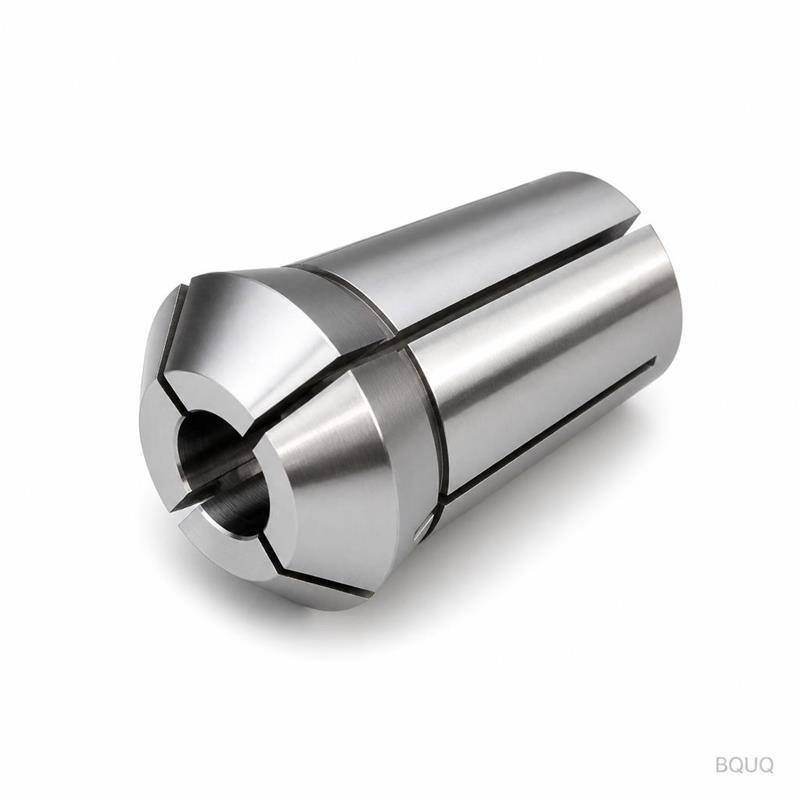
Une pince à fente est une douille fendue qui se referme sur une petite plage de dimensions de barre et centre exceptionnellement bien la matière ; une pince pleine n'a pas de fentes, ne serre qu'exactement une dimension et offre une rigidité maximale au prix d'aucune tolérance. Choisissez une pince à fente lorsque vous avez besoin de centrage, de changement rapide et d'une tolérance aux légères variations de la barre ; choisissez une pince pleine lorsque le travail exige une rigidité absolue et que la matière ne varie jamais.
Les deux conceptions se situent aux extrémités opposées du même spectre. Les deux sont des dispositifs de maintien de précision pour les barres rondes, hexagonales ou de forme spéciale sur les tours et les rectifieuses. Les deux transmettent le couple de la broche par un contact annulaire complet — c'est ce qui rend les pinces supérieures aux mandrins à mors. Mais la fente qui donne à une pince à fente sa flexibilité lui donne aussi ses limites, et l'anneau ininterrompu d'une pince pleine achète la rigidité au prix de l'adaptabilité. Comprendre ce compromis est tout le problème de la sélection.
Ce qui les rend différentes
La pince à fente, également appelée pince fendue, est une douille trempée avec des fentes longitudinales coupées partiellement depuis le nez. Tirée dans un siège conique, les doigts fendus fléchissent vers l'intérieur et serrent la barre. Relâchez la force de tirage et le ressort des doigts ouvre la pince pour l'avance de la barre ou le retrait de la pièce.
La pince pleine est un anneau trempé simple, alésé à la dimension de la barre, sans aucune fente. Elle ne peut pas se fermer : la barre est un ajustement glissant ou serré à l'intérieur, et le serrage est purement une fonction de la rigidité ininterrompue de l'anneau et de la précision de l'alésage. « Pleine » signifie ici que l'élément de serrage lui-même n'est pas fendu ; le mandrin derrière fournit toujours la force de serrage.
| Propriété | Pince à fente (fendue) | Pince pleine |
|---|---|---|
| Plage de serrage sur le diamètre | ~0,05–0,2 mm typique, dépend de la dimension | Aucune — une dimension exacte |
| Répétabilité de centrage | Très élevée (classe micron typique) | Très élevée, limitée par l'ajustement de l'alésage |
| Rigidité radiale | Légèrement réduite par les fentes | Maximale, pas de fentes pour fléchir |
| Tolérance de matière requise | Modérée ; absorbe les petites variations | Étroite ; la matière doit correspondre à l'alésage |
| Marquage sur matière tendre | Risque faible si les bords des fentes sont corrects | Risque le plus faible |
| Utilisation typique | Tours automatiques à barre, tours suisses | Rectification, précision en petites séries, maîtres |
Considérez la plage de serrage comme une indication typique, pas une garantie : elle dépend de la taille de l'alésage, du nombre de fentes et de l'angle du cône. Le mécanisme, cependant, est universel — les fentes doivent fléchir pour qu'une pince à fente fonctionne, et cette flexion est la source entière de sa tolérance dimensionnelle.
Plage de serrage : tout l'avantage de la pince à fente
Une pince à fente se referme sur tout ce qui se trouve à l'intérieur, dans la limite de la course que ses fentes permettent. Cette course est délibérément petite — quelques centièmes de millimètre sur les petits alésages, un peu plus sur les grands. La petitesse est le but : une fermeture peu profonde maintient les doigts dans leur plage élastique pour que la pince se rouvre, et maintient la géométrie de l'alésage ronde sous charge.
Cette plage fait un vrai travail en production. La barre a une tolérance, une erreur de rectitude et une légère croissance thermique ; une pince à fente absorbe ces variations et présente toujours la barre centrée. Elle permet aussi à l'opérateur d'avancer la barre entre les cycles et de re-serer sur une nouvelle section de la même barre, ce qui est le rythme quotidien d'un tour automatique.
Le coût de la plage est que la prise est un compromis aux extrêmes. À l'extrémité inférieure de la plage, les doigts se ferment plus et la force de serrage par doigt augmente de manière inégale ; à l'extrémité supérieure, la pince se ferme à peine avant de s'arrêter. Pour un alésage donné, la barre doit se situer près du milieu de la fenêtre. C'est pourquoi les fabricants de pinces publient des tableaux de tolérance de barre recommandée par alésage — restez dans la fenêtre et le faux-rond reste faible.
Précision : là où les deux conceptions gagnent — et perdent
Le centrage est la force commune. Parce que l'alésage est rectifié après trempe et que la prise enveloppe toute la circonférence, les deux types de pinces centrent la barre bien mieux qu'un mandrin à mors, dont les mors localisent la force sur trois ou six points. Le faux-rond total indiqué au nez est généralement de quelques microns pour une bonne pince et une broche vraie.
La différence apparaît sous charge. Une pince pleine n'a pas de doigts à défléchir, elle résiste donc aux forces de coupe radiales avec toute la section de l'anneau. Les fentes d'une pince à fente créent une compliance locale ; sous des coupes interrompues lourdes, les doigts peuvent fléchir assez pour laisser la barre bouger d'une fraction de micron. Pour les finitions légères, la différence est invisible. Pour l'ébauche, la rectification et le tournage dur, elle décide de la qualité de surface.
| Condition de travail | Meilleur choix | Raison |
|---|---|---|
| Production automatique à barre | À fente | Avance, libère et re-serre automatiquement |
| Grand volume monodimensionnel, coupes légères | Les deux | La pince à fente ajoute de la commodité sans pénalité |
| Rectification de petits arbres | Pleine préférée | Pas de flexion des fentes sous la pression de la meule |
| Ébauche lourde de barres | Pleine préférée | Rigidité maximale par prise |
| Changements de dimension fréquents | À fente | Une famille de corps, changer seulement l'alésage |
Le schéma est cohérent : là où la pièce est stationnaire et la coupe lourde, les pinces pleines gagnent leur rigidité ; là où la matière bouge et les cycles se répètent, les pinces à fente gagnent leur plage. Notez que sur les tours automatiques, l'anneau plein est généralement l'élément d'étanchéité/d'avance ou un maître, tandis que la pince à fente fait le serrage réel — les deux sont complémentaires aussi souvent qu'ils sont concurrents.
Tirage arrière, poussée et longueur fixe : l'effet du tube de tirage
La flexibilité de la pince à fente interagit avec la façon dont elle est actionnée, c'est pourquoi le sujet revient toujours avec la conception du tube de tirage. Dans un système à tirage arrière, la pince est tirée dans le cône, ce qui tire légèrement la barre serrée vers l'arrière ; dans un système à longueur fixe, la pince glisse sur une douille pour que la position de la barre ne change pas lors du serrage. Si vos pièces montrent des variations de longueur entre les cycles, la solution est généralement l'actionnement, pas la pince — nous couvrons la mécanique dans pinces à longueur fixe vs à tirage arrière.
Pour la pince pleine, cette question disparaît en grande partie : une pince pleine ne peut pas être tirée pour se fermer car elle n'a pas de fentes, elle est donc serrée par un mécanisme externe et la position de la barre est définie par l'ajustement de l'alésage. C'est pourquoi les pinces pleines dominent les montages de rectification, où la pièce doit être à une position axiale fixe à chaque cycle.
Ce que la spécification de faux-rond promet vraiment
Les deux types sont vendus avec une classe de faux-rond ou de concentricité, et le nombre ne signifie quelque chose que si vous savez ce qui a été mesuré. Une pince estampillée « classe 0,005 mm » signifie typiquement que la concentricité de l'alésage par rapport au cône de siège, mesurée sur un maître, est dans cette classe. Cela ne signifie pas que votre pièce finie aura un faux-rond total de 0,005 mm — le faux-rond du nez de broche, le siège du mandrin, la force du tube de tirage et la rectitude de la barre s'ajoutent tous.
Utilisez la spécification de la pince comme un budget de composant, pas une promesse sur la pièce finie. Allouez une part de votre tolérance de pièce à la pince, une part à la broche, et vérifiez l'assemblage sur la machine avec un comparateur. Si vous avez besoin de la discipline derrière les grades de faux-rond, notre article sur les grades de précision des pinces explique ce que chaque classe couvre et comment la vérifier.
Choisir pour votre machine
Adaptez le type au cycle de la machine, pas à l'habitude. Les tours automatiques et suisses sont construits autour des pinces à fente : ils avancent la barre, serrent et libèrent des milliers de fois par jour, et les variantes à longueur fixe maintiennent la longueur de la pièce. Les rectifieuses, les configurations de tournage dur et les montages à usage unique sont construits autour des pinces pleines : la pièce est chargée une fois, la coupe est lourde, et la rigidité est tout.
Lors de l'achat, indiquez la famille de machine, la taille et la forme de la barre, le grade de tolérance de la matière, et la classe de faux-rond dont la pièce finie a besoin. Pour les pinces à fente, nommez la famille de type (36, 46, 52, 60, 630, 643) et le style d'actionnement pour que le cône et le filetage correspondent au tube de tirage. BQUQ usine à la fois les pinces à fente et les conceptions pleines en alliage trempé et acier à ressort, avec des alésages rectifiés à la classe 0,005 mm sur la même ligne CNC sous contrôle ISO9001 — parcourez la gamme de pinces pour tours automatiques ou les mandrins suisses et à pinces 2J dans lesquels elles se montent, et envoyez les détails de la machine pour un devis sous 12 heures ouvrables.
Questions fréquemment posées
Q : Une pince pleine peut-elle serrer plus d'une dimension de barre ?
R : Non. Sans fentes, elle ne peut pas se fermer, donc l'alésage doit correspondre à la barre. Si la barre varie au-delà de quelques microns, utilisez une pince à fente avec une plage de serrage suffisante ou rectifiez la barre à un grade plus serré.
Q : Pourquoi les pinces à fente ont-elles un meilleur centrage que les mandrins à mors ?
R : L'alésage enveloppe toute la circonférence et est rectifié concentrique au cône de siège, donc la force de serrage est répartie uniformément. Les mandrins à mors localisent la force aux mors et ajoutent une déflexion de bras de levier, ce qui augmente le faux-rond sur les petits diamètres.
Q : Quand la plage de serrage d'une pince à fente pose-t-elle problème ?
R : Quand la barre se situe aux extrêmes de la fenêtre : une barre surdimensionnée force une fente à s'ouvrir de manière inégale, une barre sous-dimensionnée laisse les doigts à leur butée sans prise réelle. Gardez la tolérance de la barre dans la plage recommandée par le fabricant.
Q : Les pinces pleines sont-elles plus précises que les pinces à fente ?
R : À l'alésage, les deux peuvent être rectifiées à la même classe. Les pinces pleines diffèrent par la rigidité : pas de fentes signifie pas de flexion sous charge, elles maintiennent donc mieux la précision dans les coupes lourdes et la rectification où les pinces à fente peuvent fléchir.
Q : Quelle est la moins chère à entretenir ?
R : Les pinces à fente sont l'élément le plus sujet à l'usure car elles fléchissent constamment ; inspectez les fentes pour les fissures et l'alésage pour l'usure. Les pinces pleines durent jusqu'à ce que l'alésage s'use ou que l'ajustement de la pièce se desserre. Le coût de remplacement est similaire — ce sont des consommables rectifiés de précision.
Rédigé par l'équipe d'ingénierie BQUQ. BQUQ est une usine source certifiée ISO9001 à Dongguan, en Chine, exploitant l'usinage CNC, l'emboutissage des métaux, les ressorts sur mesure, les dissipateurs thermiques et les lignes de pinces sous un même toit. Envoyez les dessins à sc@bquq.com ou WhatsApp +86 13713157787 pour un devis sous 12 heures ouvrables. www.bquq.com