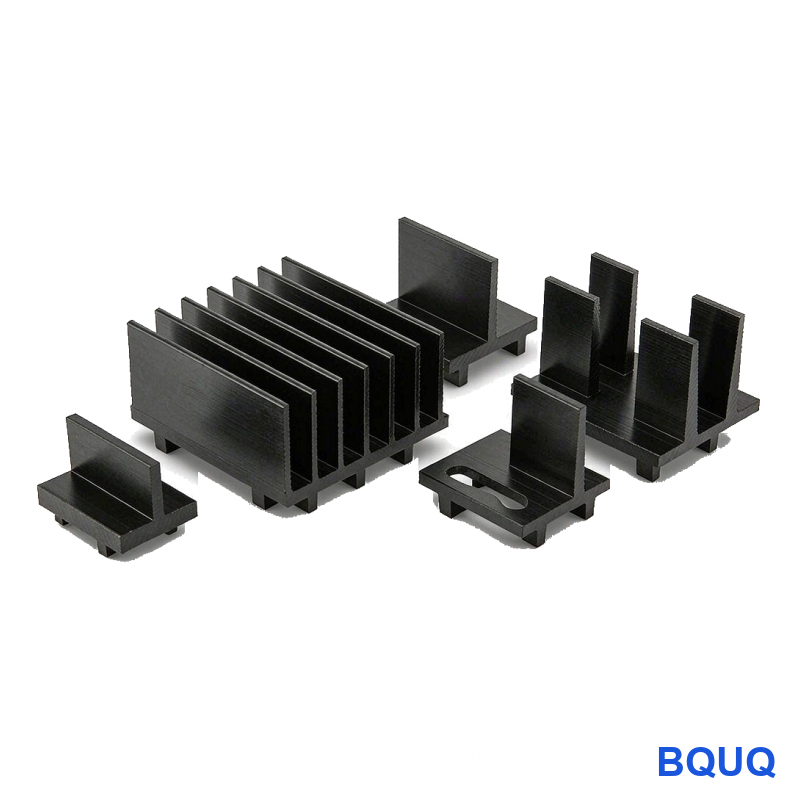
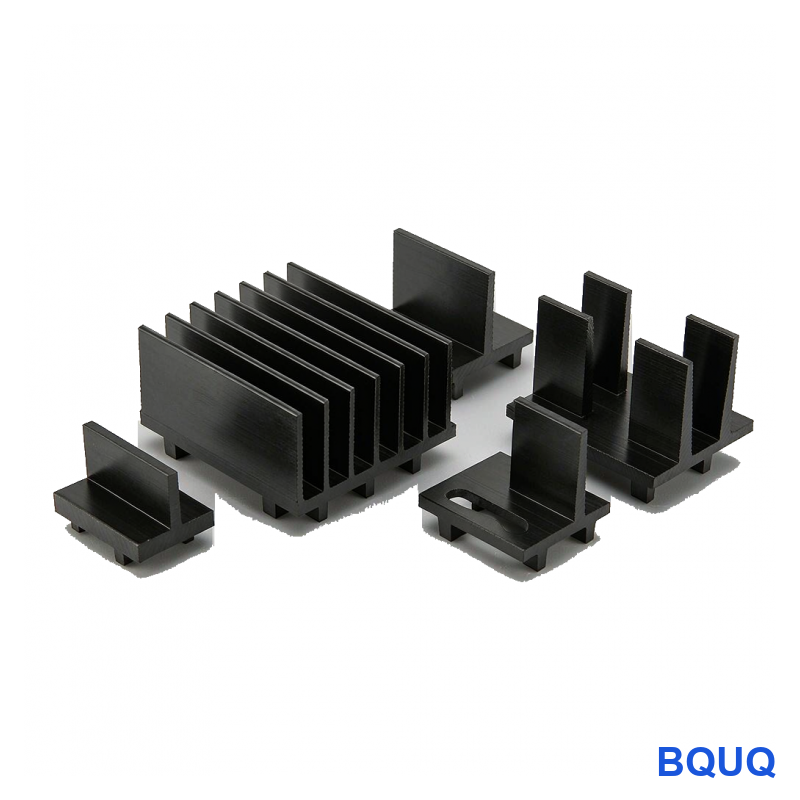
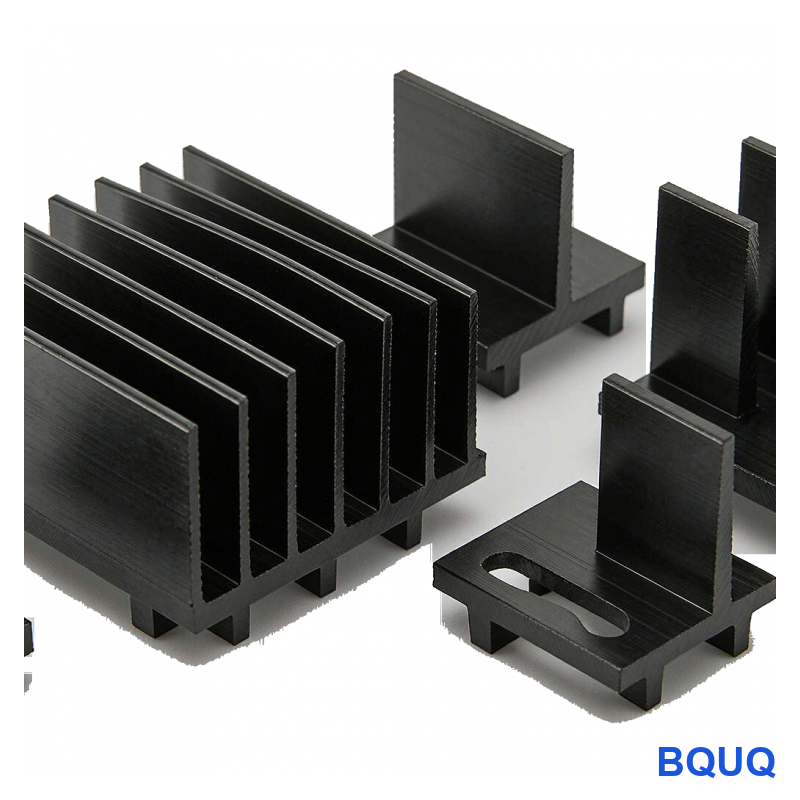
Dissipateur thermique en aluminium pour Seeed Studio XIAO: 6061-T6 aluminium, 1.0 mm fins at 2.0 mm pitch, 0.05 mm over 100 mm flatness, 0.35 K/W thermal res...
Dissipateur thermique en aluminium pour Seeed Studio XIAO
Dissipateur thermique en aluminium pour Seeed Studio XIAO: 6061-T6 aluminium, 1.0 mm fins at 2.0 mm pitch, 0.05 mm over 100 mm flatness, 0.35 K/W thermal res...
Get a Fast Quote for This Part
Send us your drawing / quantity / material — reply within 24h.
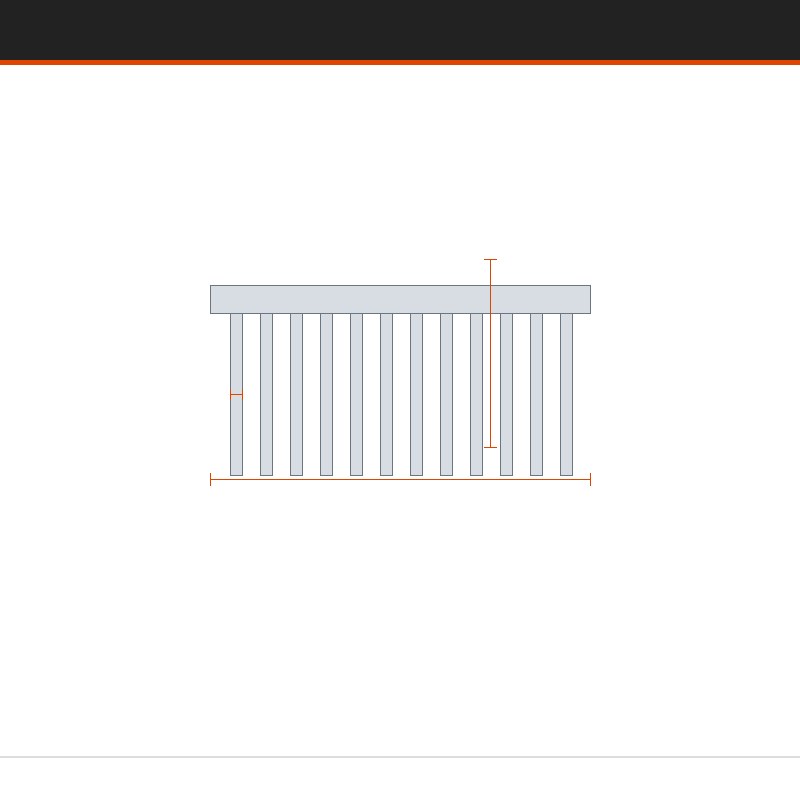
The Dissipateur thermique en aluminium pour Seeed Studio XIAO combines 2.0 mm fin pitch with 1.0 mm stock in 6061-T6 aluminium, so 20 x 20 x 10 mm parts keep 0.05 mm over 100 mm on the mounting face. Thermal resistance is 0.35 K/W, measured at CMM 0.001 mm resolution per lot.
Design Approach and Process
A single 160 T stroke forms the whole Dissipateur thermique en aluminium pour Seeed Studio XIAO, so part cost stops scaling with complexity. Tooling runs ±0.05 mm, and the 8 s cycle feeds a 120,000 pcs line.
Low fin gauge is where stamping wins: 1.0 mm fins at 2.0 mm pitch give more surface per cubic millimetre than a machined or extruded profile of the same envelope.
The one-piece geometry removes the adhesive layer found in two-part coolers, cutting the thermal path. Nothing sits between 6061-T6 aluminium and the airflow except the stamped surface itself.
Pressing 6061-T6 aluminium keeps the Dissipateur thermique en aluminium pour Seeed Studio XIAO light, from 280 g depending on envelope, without sacrificing fin density, which matters where airflow path length is already fixed by the enclosure.
Every stroke is dimensionally identical, so ±0.10 mm hole position carries across the batch. That is what makes EV and OBC charger volume programs repeatable.
Material Selection and Surface Finish
The standard material is 6061-T6 aluminium, supplied with zinc-nickel plating, trivalent passivation. For applications where EV and OBC charger exposure is a concern, we recommend the passivated route; where conductivity matters more than weight, copper C110 raises thermal performance and roughly doubles unit mass.
Tolerance Classes You Can Specify
General dimensions run to ±0.10 mm, with critical features such as ±0.03 mm on fin pitch held separately. Formed geometry inherits tooling repeatability of ±0.05 mm, and hole position is held to ±0.10 mm. Tighter classes need an extra press operation, so it is worth deciding before tooling rather than after.
Inspection Before Every Shipment
Flatness is checked on a granite surface plate, 20 °C against a 0.05 mm over 100 mm limit, and fin pitch is verified optically at ±0.05 mm. Reports go out with each lot.
Each batch carries a CMM report from CMM 0.001 mm resolution. We record flatness, pitch, base thickness and hole position, and flag anything outside ±0.10 mm before it leaves the line.
Lot traceability runs from coil to carton: heat number, press stroke range and inspection record stay attached, so a field issue can be tied back to a specific run.
We inspect 1.0 mm fin tips for burr and crack after forming, because stamping can split a root without shifting any drawing dimension. Burr limit is set per part.
In EV and OBC charger, the 0.35 K/W rating determines how much airflow the enclosure still needs. At EV and OBC charger junction temperatures, 1.0 mm fins at 2.0 mm pitch keep the delta-T inside the sensor budget.
EV and OBC charger packaging and vibration rules push toward one-piece construction. A stamped Dissipateur thermique en aluminium pour Seeed Studio XIAO has no adhesive to creep, which is the usual failure mode in two-part coolers.
Designers working on EV and OBC charger ask for flatness before they ask for thermal data, because EV and OBC charger assembly is automated and a non-flat base stops the line.
EV and OBC charger designs often run a 2.0 m/s forced-air path. 0.35 K/W at ΔT = 60 K, natural convection means EV and OBC charger can hold its target with fan power below the acoustic limit.
Specifications
Parameter
Value / Range
Material
6061-T6 aluminium
Fin thickness
1.0 mm
Fin pitch
2.0 mm
Fin height
22 mm
Base thickness
1.5 mm
Base flatness
0.05 mm over 100 mm
Thermal resistance
0.35 K/W
Thermal test condition
ΔT = 60 K, natural convection
Surface finish
zinc-nickel plating, trivalent passivation
Size range
20 x 20 x 10 mm
FAQ: Your Questions Before Ordering
Can you customise the Dissipateur thermique en aluminium pour Seeed Studio XIAO for our application?
Yes. Send a drawing or a sample and we return a DFM note within 3 working days. Most EV and OBC charger customisations change 2.0 mm, 1.5 mm or the hole pattern, and all three are tooling changes on the existing 160 T press rather than a new machine.
6061-T6 aluminium is the standard choice. For EV and OBC charger in a corrosive environment we specify 6063-T5 with zinc-nickel plating, trivalent passivation; for the highest conductivity we move to copper C110, which raises cost and weight but drops thermal resistance by roughly half at the same envelope.
How does this compare to an extruded Dissipateur thermique en aluminium pour Seeed Studio XIAO?
Extrusion is cheaper above roughly 500,000 pieces per year and gives a smoother profile. Stamping wins below that and wherever fin gauge drops below 0.5 mm, because extrusion cannot hold 1.0 mm consistently. For EV and OBC charger prototypes, tooling cost usually decides it.
What is the flatness on the mounting face?
0.05 mm over 100 mm measured on granite surface plate, 20 °C. This is the number that matters for EV and OBC charger, because the thermal pad needs even contact. If your assembly needs better, say so and we can add a skim operation.
What is the difference between your Dissipateur thermique en aluminium pour Seeed Studio XIAO and a skived fin Dissipateur thermique en aluminium pour Seeed Studio XIAO?
Skived fins are milled, so you get thin, tall fins and higher density in a given height, but the cost scales directly with fin area. Stamping gives the same result in one stroke at a much lower unit cost below 120,000 pcs. For EV and OBC charger in a fixed-height enclosure, stamped is normally the right answer.
How We Manufacture and Ship
The line sits in Dongguan in a single ISO9001 plant. 160 T presses cover the Dissipateur thermique en aluminium pour Seeed Studio XIAO family, and 120,000 pcs per month is current committed output.
The factory holds ISO9001 and can ship RoHS and REACH documentation with the PE bag + export carton, 20 kg per carton. Third-party SGS inspection is arranged on request before the container is sealed.
We quote FOB Shenzhen and hold 50 pcs for sampling. Sampling is sample fee 30-80 USD, so a first evaluation does not require a production commitment.